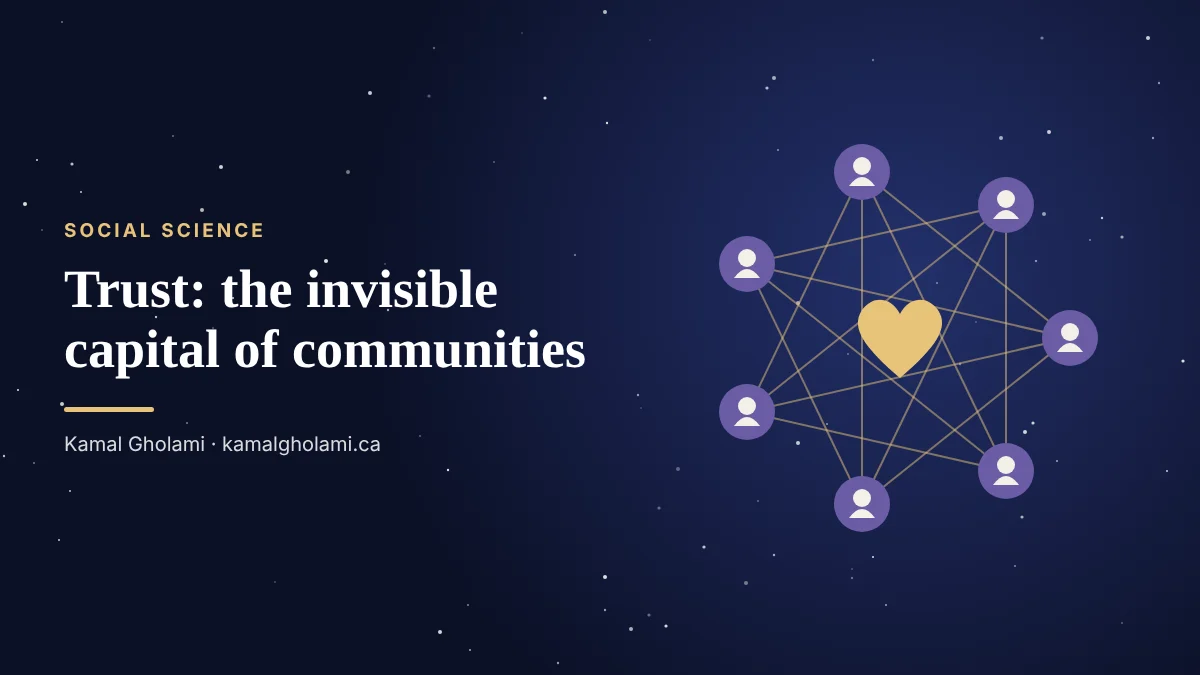
Economists measure financial capital and physical capital. Social scientists have long pointed to a third kind that may matter just as much: social capital, the networks, norms and trust that allow people to cooperate.
Why trust matters
In places where people generally trust one another, a lot of things become easier and cheaper. Deals can be made on a handshake. Neighbours help each other. Institutions work with less friction. Research across many countries has found that higher levels of social trust tend to go hand in hand with stronger economies, healthier democracies and greater personal wellbeing.
Bonding and bridging
Researchers often distinguish two forms of social capital:
- Bonding capital holds close-knit groups together, like families, faith communities and cultural associations. It provides support and belonging.
- Bridging capital connects people across different groups. It brings new ideas, opportunities and understanding.
Healthy communities need both. Strong bonds without bridges can turn inward; bridges without bonds can feel thin.
Newcomers and community
As someone who has worked with many newcomers to Canada, I’ve seen how important both forms are. Cultural communities offer the first safety net, while bridges into the wider society open doors to work, friendship and a sense of home.
Building it, one interaction at a time
Social capital isn’t built by policy alone. It grows every time we keep a promise, help a neighbour, volunteer, mentor someone or simply treat a stranger with respect. Each act is a small deposit in an account we all share.
Leave a Reply